Thursday, January 30, 2014

Flipped Lesson: UK devolution


AP Comparative Government: Use the links here to complete this lesson on UK Devolution by Monday, Feb. 2.

BBC: A quick guide -- quick examples of devolved powers in Scotland, Northern Ireland, Wales and the City of London.


Monstrous

This cartoon by Schrank from The Independent relates to a topic we'll be hearing a lot more about in the months and years to come: Scottish independence.
UK prime minister David Cameron and leader of the opposition Labour party Ed Miliband are in a rowing boat on Loch Ness. All of a sudden, a great tartan monster rises from the depths (in fact, it's Scottish First Minister Alex Salmond, who is leading the fight for independence). Cameron and Miliband exclaim, "It's monstrous!".

EXPLANATION
The cartoonist plays on the two meanings of the word 'monstrous'. If you describe something as monstrous, you mean that it is extremely frightening because it appears unnatural or ugly (just like a monster, in fact). However, monstrous can also be used to describe an event that you consider to be extremely shocking or unfair. • She endured his monstrous behaviour for years. Both Cameron and Miliband are opposed to Scottish independence (and the consequent break-up of the UK), which explains their horrified reaction.

The Un-United Kingdom -- After more than 300 years of union, is Scotland ready to declare independence?

UK Polling Report: Scottish Independence Referendum -- Where is public opinion on the referendum vote tracking? Also check out the latest political polls of the parties in the UK.

Answer the following questions in the comment section of this post by Monday:

  1. Define Devolution. Identify one institution created by devolution in the UK in the past 15 years.
  2. The advent of devolution in the UK, especially since 1997, has complicated and confused understanding of the UK system vs. the US system. Compare/contrast the US constituional principle that relates most to devolution. How is the US principle similar? How is it different?
  3. Give a quick summary of the Northern Ireland Good Friday referendum in 1998 and the prediction for the Scottish Independence vote (scheduled for Sept, 2014).

Wednesday, January 29, 2014

How Free Should We Be?

 
Question:
 
Should the federal government monitor phone and internet activity through federal offices, such as the National Security Agency (NSA), to protect the security of the United States and its citizens?
 
As a culiminating authentic assessment activity for the first unit in American Government (Traditional) we will deliberate or hold a Socratic Seminar on Monday on the question above. You will use the resources at CSPAN Classroom National Security & Surveillance site. This will be a 30 point assignment:
  • 20 points -- Note-Taking Chart; Vocabulary Preview; Dialectical Journal (6 quotes)
  • 10 points -- Your participation in Monday's deliberation/seminar
Articles should be read, and videos should be watched, with evidence from the texts incorporated in your writing. The written portion of the assignment will serve as your "talking points" for Monday's experience.

Some Rules of the Road for Friday's Experience

1) Talk to each other, not just to the discussion leader or teacher.

2) Refer to evidence from the text to support your ideas.

3) Ask questions if you do not understand what someone has said, or you can paraphrase what another student has said for clarification. (“I think you said this, is that right?”)

4) You do not need to raise your hands to speak, but please pay attention to your “airtime” – how much you have spoken in relation to other students.

5) Don’t interrupt.

6) Don’t put down the ideas of another student. Without judging the student who you may disagree with, state your alternate interpretation or ask a follow-up question to help probe or clarify an idea.


Monday, January 27, 2014

AV vote was "bitter blow for people who believe in the need for political reform."


Call this a Polar Vortex Contingency EC Lesson -- With the temp currently -3, 3 bonus points available for anyone that posts thoughts here today on the UK AV referendum in 2011.

In just the second UK-wide referendum in history over the Alternative Vote, the UK voted overwhelmingly in May, 2011 to reject changing the way MPs are elected - dealing a bitter blow to Nick Clegg on top of heavy Lib Dem poll losses. It was clear British voters chose to ignore process, wanting the government to focus on progress. Deputy Prime Minister Nick Clegg, and the Lib-Dems the strong supporters of electoral reform, also felt his side felt the wrath of voters' backlash of austerity measures. The BBC reported:

 Officials say 19.1m people voted in the second UK-wide referendum in history - a higher than expected turnout of 41%.

The final result put the Yes vote at 32.1% and the No vote at 67.9%.

It comes as the Lib Dems suffered a rout in English local elections - and the SNP scored an historic victory in the Scottish Parliament poll.

A debate that was often about the complexity of electoral systems ended in the simplest of results.

 The No campaign won, overwhelmingly.

The rush to attribute blame, or grab the credit for that result, begins here.

Those who favoured the Yes campaign will argue they were defeated by the Prime Minister's campaigning power, a largely hostile press and a tough opposing campaign.

Those who backed a No vote will say they won the argument for the merits of the status quo, and persuaded people the alternative vote was complex and unnecessary.

The voters, of course, needed only to mark crosses on ballot papers. They did not have to explain their reasoning.

So campaigners who devoted months of their lives to this argument will never know what difference, if any, they made to the result.

Read Ross's thoughts in full

Bitter blow for Clegg, Lib-Dems

Snow/Cold Day: Time to "Slow Jam" Tuesday's State of the Union


Washington Post: A televised history of State of the Union

(Thanks, Ken Halla, US Government Teachers Blog)

Other than President Ford, everyone including W. Bush seemed to think the state of our union was good even as we entered two wars.  That and other similarities are very interesting and clearly ongoing if you watch the snippets from State of the Union speeches from Kennedy to the present.

Also, here is a short, but interesting read talking about how many people take part in writing the State of the Union speech.  The video below short clip on the making of the 2012 speech.

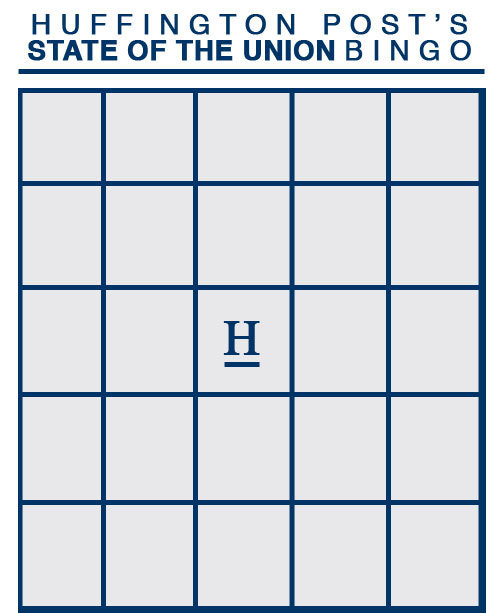
Also, EC available for anyone that completes A State of the Union Bingo Card like this one:


Download the blank bingo card

Fill each square with what you think Obama will discuss during his speech. Here are a few ideas:
 
Executive Order
Minimum Wage
Bipartisanship
Across the Aisle
Tucson
Folks
Healthcare
courage of our convictions
strength of our union
political spectrum
our union is strong
michele
American jobs
China
GE
manufacturing
clean energy
state of the art
community
shared hopes
who we really are
great challenges
the American dream
our children and our grandchildren

On Tuesday, you might want to go to the "enhanced" White House page where you can get lots of extra tidbits about the speech as it progresses.  This means you will be able to watch the speech and see graphics at the same time.


Saturday, January 25, 2014

What is the UK Constitution?


(From the University of London School of Public Policy)

Constitutions organise, distribute and regulate state power. They set out the structure of the state, the major state institutions, and the principles governing their relations with each other and with the state’s citizens. Britain is unusual in that it has an ‘unwritten’ constitution: unlike the great majority of countries there is no single legal document which sets out in one place the fundamental laws outlining how the state works. Britain’s lack of a ‘written’ constitution can be explained by its history. In other countries, many of whom have experienced revolution or regime change, it has been necessary to start from scratch or begin from first principles, constructing new state institutions and defining in detail their relations with each other and their citizens. By contrast, the British Constitution has evolved over a long period of time, reflecting the relative stability of the British polity. It has never been thought necessary to consolidate the basic building blocks of this order in Britain. What Britain has instead is an accumulation of various statutes, conventions, judicial decisions and treaties which collectively can be referred to as the British Constitution. It is thus more accurate to refer to Britain’s constitution as an ‘uncodified’ constitution, rather than an ‘unwritten’ one.

More

For more on Rule of Law among our CP 6 and the World, Print and refer to the following worksheets developed by Mr. John Unruh-Friesen, who teaches at Hopkins High School in Minnesota.

Democracy Spectrum

Legal Systems

Russell Brand a Political Statesman?

Above is the full Russell Brand interview with BBC Newsnight's Jeremy Paxman.

Here is the NewStatesman page promoting Brand's guest issue.

Read Russell Brand's manifesto for revolution - all 4,500 words of it - here.


Opportunity in comment section for an EC point or two, how many purely British social cleavages can you identify in Brand's words. Remember, With Words We Govern. Could Britain govern with his?

Thursday, January 23, 2014

Immigration issues across the pond

(From the Daily Mail)

Benefits will be stripped from immigrants who cannot speak English, it has been reported.

David Cameron intends to make the cuts in order to slash the country’s welfare bill, according to the Mail on Sunday.

The Prime Minister reportedly wants to stop printing welfare literature in foreign languages and prevent claimants using taxpayer-funded translators at benefits offices.

According to the newspaper the measures, which were due to be announced on Monday, have been delayed following a row with Nick Clegg, the Deputy Prime Minister.

It is hoped the scrapping of foreign-language documentation explaining how to claim benefits will make it harder for immigrants to make use of the UK’s benefits system, while encouraging those already in the country to learn English. The measures would also save the money spent on translators.
The Mail on Sunday said the plans, which would also affect British residents who cannot speak English, have been drawn up by Iain Duncan Smith, the Work and Pensions Secretary.

A Conservative source told the newspaper: “The vast majority of voters will think this idea is plain common sense.

“It is unreasonable to expect taxpayers to spend huge sums on translators when people should be learning to read and write English.”

Liam Fox, the former Defence Secretary, said: “The principle is a good one but it needs to be introduced in a way that’s fair and reasonable.

“If it is, it will meet with general public approval. The ability to speak English is one of the most empowering tools in the labour market and we should be encouraging as many people as possible to learn it.”

The Mail on Sunday said there had been a series of private disagreements between Mr Cameron and Mr Clegg over the measures.

However, Tory sources reportedly said they were hopeful the changes will be confirmed later this week if the Liberal Democrats can be persuaded.

An unnamed official involved in the plan told the newspaper: “Cameron and Duncan Smith are very enthusiastic about it, but the Lib Dems had a wobble. They are nervous of being portrayed as being too harsh on immigrants.”

Keith Vaz, the Labour MP and chairman of the Commons’ home affairs committee, said: “In principle, it is a good idea, but it could cost the taxpayer more because if people are refused benefit and have a genuine claim, they will sue the Government.”

Read more: http://www.businessinsider.com/david-camerons-immigrants-benefits-plan-2014-1#ixzz2rHB2EyK2